Primary SEO Keyword: Security Operations Center (SOC)
Secondary Keywords: unified platform, incident management, advanced Artificial Intelligence, automated threat detection, time-to-value, force multiplier, security operations, task management, incident response
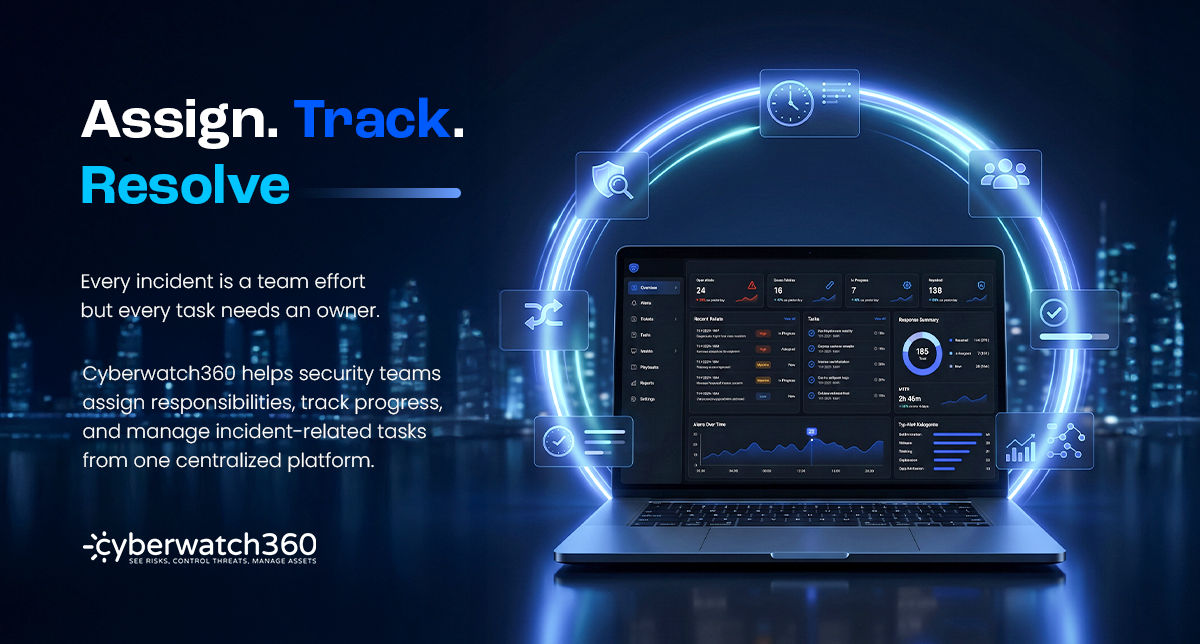
Every security incident is a team effort—but every task needs an owner.
For modern security teams, identifying a threat is only one part of the job. Once an incident is detected, someone needs to investigate it, someone needs to respond, and someone needs to make sure the required actions are completed.
When responsibilities are unclear, security operations can quickly become slower and harder to manage. Tasks may sit unfinished, analysts may duplicate work, and managers can struggle to understand what has been completed and what still needs attention.
This challenge becomes even more significant as Security Operations Centers (SOCs) deal with alert overload, fragmented tools, manual workflows, and limited cybersecurity resources. These are among the key operational challenges identified for modern SOCs, particularly in the MENA market.
The solution isn't necessarily adding another tool to the security stack. It is creating a more connected way for security teams to move from detection to action.
That is where Cyberwatch360 comes in.
A security alert may tell a team that something requires attention. But an alert alone does not resolve the issue.
An effective incident management process needs to answer practical questions:
In many environments, these answers are spread across different systems. Analysts may investigate an alert in one platform, create a ticket in another, communicate with colleagues elsewhere, and track individual tasks through a separate workflow.
This fragmented approach creates unnecessary friction.
Cyberwatch360's marketing analysis identifies fragmented tools and manual workflows as major pain points for modern SOCs. It also highlights the lack of a truly unified, end-to-end workflow as an important gap in the market.
The result is simple: more systems to manage and more opportunities for important actions to lose momentum.
Clear task ownership means turning an incident into a structured set of actions with defined responsibility.
Instead of simply seeing:
"Suspicious activity detected."
A security team should be able to move toward:
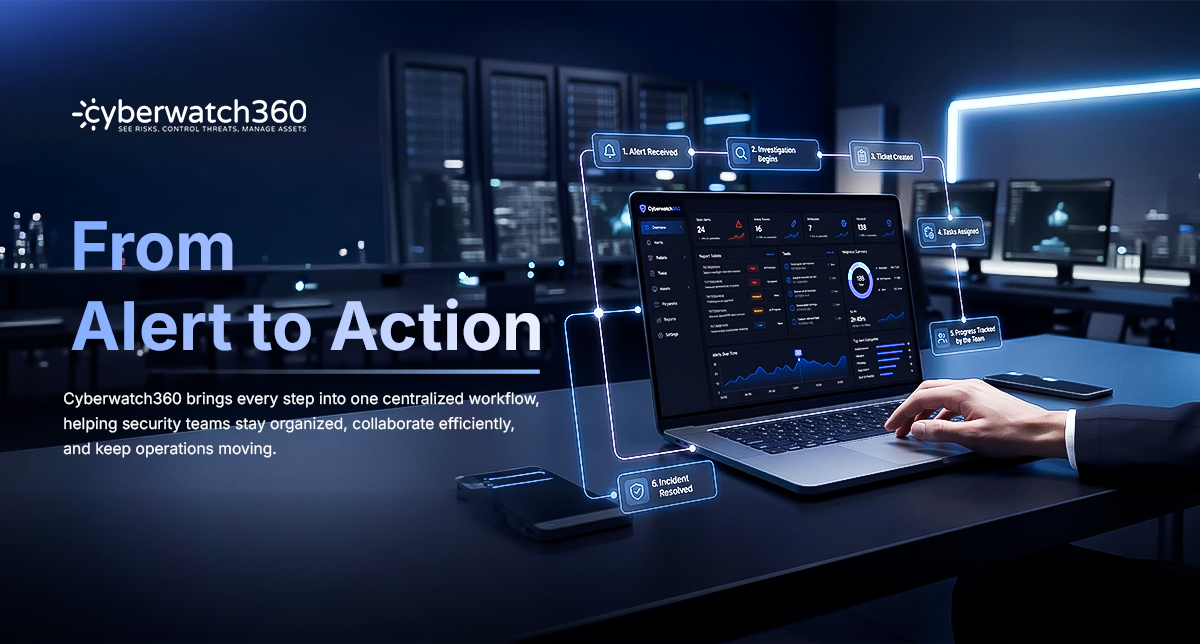
Incident → Ticket → Task → Owner → Progress → Resolution
This creates a clear operational path.
For example, an analyst may identify a suspicious event and initiate an incident. That incident can become a ticket, which can then be broken down into specific, assignable tasks.
One team member might investigate the activity. Another might validate affected systems. A third might handle remediation.
Each person knows what they are responsible for, while the security manager has visibility into the overall progress.
This is not just about organization. It creates accountability throughout the incident response process.
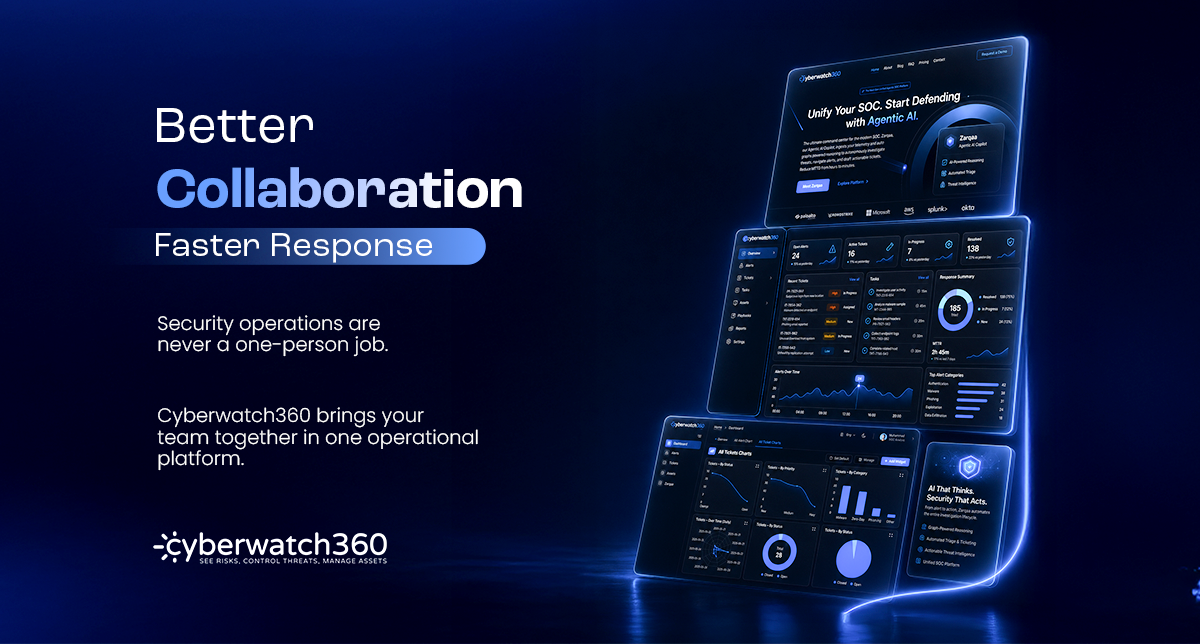
Cyberwatch360 is designed as a smart, unified platform that brings alerts, ticketing, and Security Operations Center (SOC) tasks together in one place. Its broader vision also includes incident management, automated threat detection, response, and analysis within a unified, AI-driven system.
Rather than forcing security teams to move between disconnected systems, Cyberwatch360 creates a more seamless operational workflow.
Once an incident requires action, teams need more than visibility—they need execution.
Cyberwatch360's integrated workflow allows security operations to move from an alert to a ticket and then into assignable tasks. The platform's planned workflow can break a ticket into tasks that can be managed through a structured board, allowing teams to see what needs to happen and who owns each action.
This helps transform incident management from a collection of alerts into a controlled operational process.
A task without ownership can easily become a task that nobody prioritizes.
By establishing clear responsibility, security teams can reduce ambiguity and improve operational accountability.
For SOC managers, this provides greater visibility into team workload and progress. For analysts, it creates clarity around their responsibilities and priorities.
The objective is straightforward:
Everyone should know what needs to be done—and who is responsible for doing it.
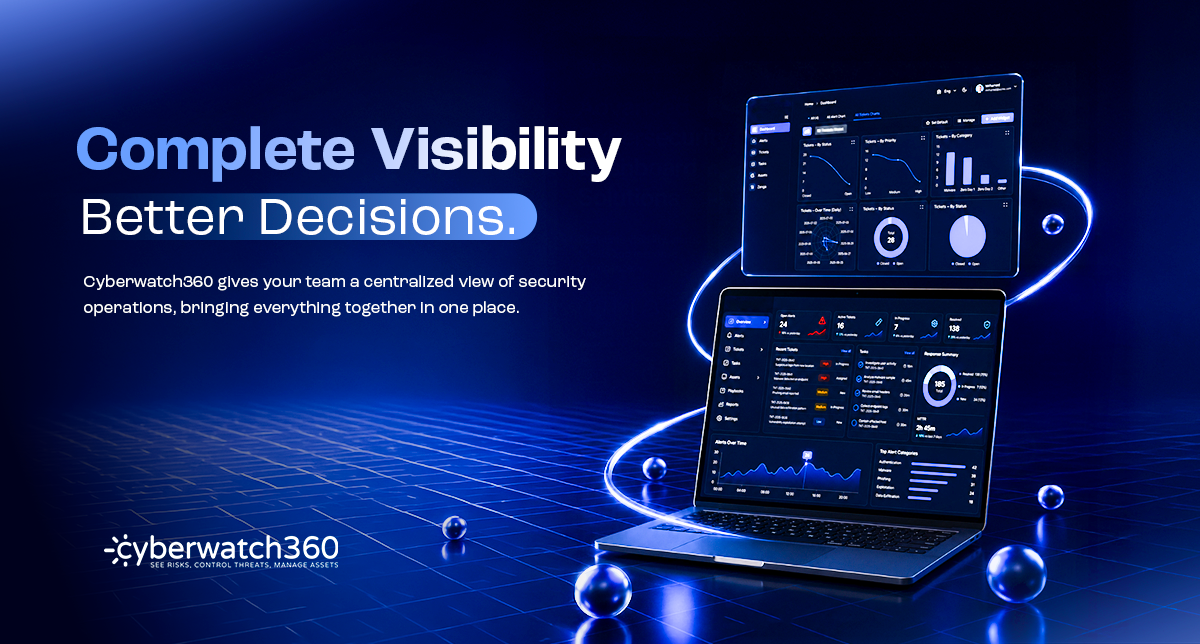
Security teams need to understand not only which incidents exist, but also what is happening with them.
Centralized visibility helps teams track the status of work without relying on separate spreadsheets, messaging threads, or disconnected ticketing systems.
Cyberwatch360 is designed around this principle by integrating Alert, Ticket, Task, and Service Management within a single console.
That means teams can maintain greater visibility throughout the operational lifecycle of an incident.
Task management is only one part of the Cyberwatch360 approach.
The platform combines centralized operations with advanced Artificial Intelligence to help security teams reduce noise, prioritize incidents, automate repetitive work, and focus their attention on genuine threats.
Its Zarqaa AI Assistant is positioned as an AI copilot that can learn from an organization's internal data to provide more context-aware insights. The platform also supports an on-premises deployment option for Zarqaa, which is particularly relevant for organizations handling sensitive security information.
This creates an important distinction:
AI is not there simply to add another layer of technology.
It is there to help teams work smarter with the resources they already have.
Modern security teams face increasing volumes and complexity of threats while also dealing with a shortage of skilled cybersecurity professionals.
The Cyberwatch360 marketing analysis identifies AI and automation as important industry trends and highlights the cybersecurity skills gap as a driver for solutions that can act as a force multiplier for existing teams.
Cyberwatch360 brings this concept into the broader security workflow.
Through automation and intelligent prioritization, teams can reduce repetitive effort and spend more time on the incidents that genuinely require human attention.
This supports a more efficient approach to automated threat detection and incident response, without making the security operation unnecessarily complicated.
One of the biggest advantages of a unified approach is operational simplicity.
Cyberwatch360 is designed to consolidate alerts, tickets, tasks, and service management rather than requiring security teams to coordinate these activities across multiple disconnected platforms.
This matters for organizations that want to improve security operations without creating another complex technology layer.
The platform's strategy specifically emphasizes simplicity and rapid time-to-value, with the goal of helping MSSPs and SMEs gain meaningful value quickly rather than facing lengthy deployments and complex implementation requirements.
For smaller security teams, that efficiency can be particularly valuable.
Instead of continuously adding people and tools to compensate for operational complexity, organizations can give their existing teams a more connected environment in which to work.
Not every organization has the resources to operate a large 24/7 SOC.
Cyberwatch360's target customer profile includes SMEs with small technical teams that may not have the budget for a dedicated Security Operations Center. The platform is positioned as a security "copilot" and force multiplier, helping smaller teams defend their organizations more effectively.
The same principle applies to MSSPs managing multiple customers with lean teams.
By combining centralized visibility, automation, structured workflows, and intelligent assistance, Cyberwatch360 helps teams make better use of the resources they already have.
The goal isn't simply to do more work. It's to make security work more efficiently.
Cybersecurity effectiveness is not determined only by how quickly a team detects a threat.
It also depends on what happens next.
A mature security operation needs a reliable process for moving from:
Detection → Investigation → Assignment → Action → Resolution
Clear ownership strengthens every stage of that process.
When tasks have defined owners and visible progress, managers can identify bottlenecks earlier. Analysts can focus on their responsibilities. Teams can collaborate without constantly asking who is handling what.
Most importantly, security operations gain momentum.
That is the real value of connecting incident management and task management within the same operational environment.
Security teams don't need more complexity.
They need a clearer path from the moment an alert appears to the moment the right action is completed.
Cyberwatch360 brings alerts, ticketing, tasks, incident management, and intelligent security capabilities together through a unified platform designed to simplify modern security operations.
With clear task ownership, structured workflows, centralized visibility, advanced Artificial Intelligence, and automation, teams can spend less time managing fragmented processes—and more time focusing on what matters.
Because knowing what needs to be done is only the first step. Knowing who owns it keeps security operations moving.
Discover how Cyberwatch360 can help your team move from alerts to clearly defined actions, improve operational accountability, and get more value from your existing security resources.
Request a Cyberwatch360 demo or schedule a consultation today.
Cyberwatch360 From Alerts to Action, Instantly.